
Group visits
Bring a group to the museum
Clubs, schools, historical societies and social groups are welcome by arrangement — £2 per head, up to 20 people, with two weeks' notice.
Book a group visitThe museum's objects date from the Late Bronze Age to the 20th century. Its best-known pieces are the carved stones saved by Charles Dawson Brown in 1869, but the collection is more than stone.
The museum continues to collect archaeological and social history objects from West Kirby Parish and the local area. Our Acquisition Policy explains how.
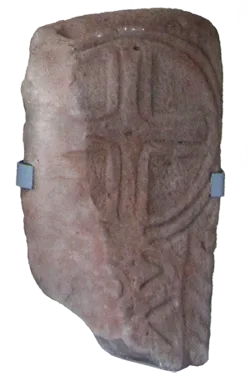
The earliest carved stones are sections of two crosses from the 10th century.
The majority of the stone collection comprises masonry and grave markers from around the time of the Norman Conquest, including numerous column and wall fragments from about 1150.
Two of the most interesting stone-carved items are a child's coffin dating from the 12th century, and a footbath.
A column base on display probably dates from the 1230s. Three 13th-century grave slabs show elaborate sandstone designs that hint at the nature of those buried, and the museum also holds a corbel head from around the 1330s.
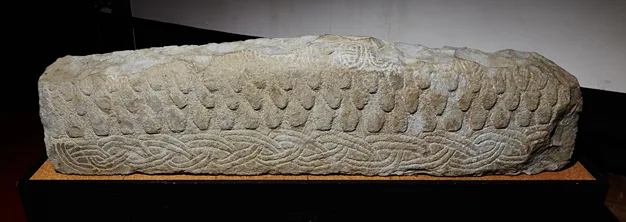
The oldest artefact connected with the collection is also the best known in the area, though it isn't held in the museum building itself. This Anglo-Norse hogback stone dates to the 10th century AD and was discovered in 1869. If St Bridget's Church is open when you visit, you can see it there.
This is a high-status form of monument. Hogback stones are sculptured stones with a distinctive curved ridge and bowed sides. This shape, and the carved “roof shingles” on either side of the central ridge, are reminiscent of Scandinavian-type houses of the Viking age — stylised houses for the dead.
The stone is carved from hard, grey sandstone which may have come from the Ruabon or Cefn area of North Wales. This type of monument is rare in the region; they are found in far greater numbers in Yorkshire and Cumbria.
The non-local stone underlines the exotic and elite nature of this particular memorial. The design shows close links with other northern and western examples, and its coastal position probably reflects involvement in coastal trade during the Viking period.
Plan ahead
Group visits
Clubs, schools, historical societies and social groups are welcome by arrangement — £2 per head, up to 20 people, with two weeks' notice.
Book a group visitResearch Group
Our Research Group holds decades of local material — including records of who lived and worked in individual houses and shops across the village. Genuine enquiries are welcome.
Contact the Research Group