
Group visits
Bring a group to the museum
Clubs, schools, historical societies and social groups are welcome by arrangement — £2 per head, up to 20 people, with two weeks' notice.
Book a group visitThe mountaineer who disappeared attempting Everest in 1924 — famous for answering “because it's there” when asked why he wanted to climb it — was schooled in West Kirby.
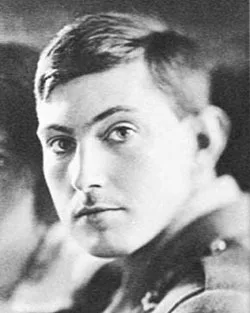
George Herbert Leigh Mallory is one of the best-known names in the history of mountaineering — a schoolmaster and climber whose final attempt on the summit of Everest, in the summer of 1924, became one of the twentieth century's enduring mysteries.
Mallory took up climbing while a pupil at Winchester College, encouraged by a schoolmaster who introduced him to the sport in the Alps. He went on to study history at Magdalene College, Cambridge, where he became part of a circle of climbers and writers — including members of the Bloomsbury Group — before returning to teaching, including a spell connected with West Kirby, in the years before the First World War.
Mallory was a leading member of the first three British expeditions to Everest: the 1921 reconnaissance, which mapped approaches to the mountain from Tibet for the first time; the 1922 expedition, the first serious attempt on the summit, on which Mallory and his companions reached over 8,000 metres without supplementary oxygen; and the 1924 expedition, from which he did not return.
On 8 June 1924, Mallory and his young climbing partner Andrew “Sandy” Irvine were last seen a few hundred metres from the summit, before cloud closed in around them. Whether they reached the top, nine years before Everest's first confirmed ascent in 1953, remains unknown. Mallory's body was found on the mountain in 1999; Irvine has never been located.
Mallory's most famous words came not from the mountain itself but from a 1923 press interview in New York, during a lecture tour ahead of the 1924 expedition. Asked by a reporter why he wanted to climb Everest, he is said to have replied simply: “Because it's there.” The line has outlived almost everything else written about him, and is still quoted as a shorthand for mountaineering — and exploration — for its own sake.
Plan ahead
Group visits
Clubs, schools, historical societies and social groups are welcome by arrangement — £2 per head, up to 20 people, with two weeks' notice.
Book a group visitResearch Group
Our Research Group holds decades of local material — including records of who lived and worked in individual houses and shops across the village. Genuine enquiries are welcome.
Contact the Research Group