
Group visits
Bring a group to the museum
Clubs, schools, historical societies and social groups are welcome by arrangement — £2 per head, up to 20 people, with two weeks' notice.
Book a group visitChancellor of the Exchequer, Foreign Secretary, and later Speaker of the House of Commons — one of the most senior British politicians of the postwar decades, and a figure connected with West Kirby.
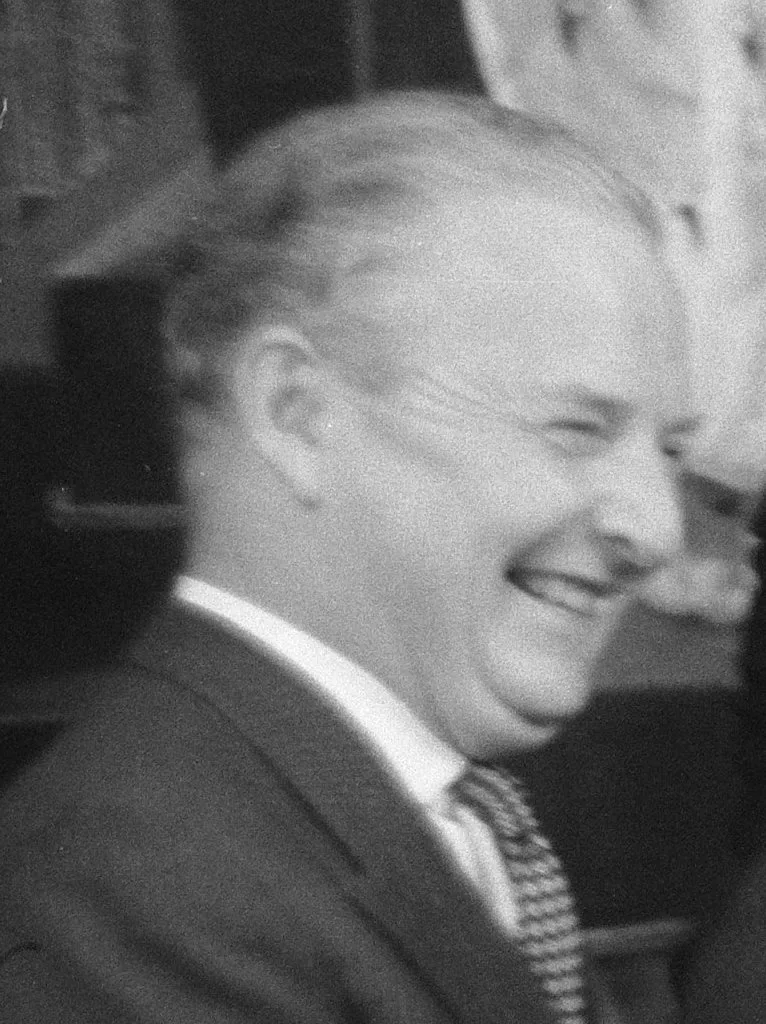
John Selwyn Brooke Lloyd, later Lord Selwyn-Lloyd, was one of the most senior figures in British politics through the 1950s, 60s and 70s, holding three of the great offices of state and government over a career spanning three decades on the Conservative front bench.
Lloyd trained as a barrister before entering Parliament as MP for the Wirral in 1945, a seat he held for over thirty years. He served as Foreign Secretary from 1955 to 1960, a period that included the 1956 Suez Crisis, one of the defining foreign-policy episodes of postwar British history. He went on to serve as Chancellor of the Exchequer from 1960 to 1962, with responsibility for the government's economic policy during a difficult period for sterling.
After a period out of front-line government, Lloyd returned to prominence as Speaker of the House of Commons from 1971 to 1976, presiding over the Commons chamber in a role that sits above party politics — a mark of the cross-party respect he had earned over a long career. He was made a life peer, Lord Selwyn-Lloyd, on his retirement from the Speakership.
Lloyd's political career was built from a Wirral base, representing the peninsula in Parliament from 1945 until 1976 — a connection the museum is glad to note among West Kirby's notable figures, alongside its record of the town's Victorian and twentieth-century growth (see West Kirby Village).
Plan ahead
Group visits
Clubs, schools, historical societies and social groups are welcome by arrangement — £2 per head, up to 20 people, with two weeks' notice.
Book a group visitResearch Group
Our Research Group holds decades of local material — including records of who lived and worked in individual houses and shops across the village. Genuine enquiries are welcome.
Contact the Research Group