A mile offshore at the mouth of the Dee, the tidal islands of Hilbre, Middle Eye and Little Eye have watched over West Kirby's shipping, its shipwrecks, and now its wildlife, for centuries.
Hilbre Island and its two smaller neighbours, Middle Eye and Little Eye, sit roughly a mile offshore at the point where the Dee Estuary opens into Liverpool Bay. At low tide, a route opens up across sand and rock gullies from West Kirby beach — the islands have never needed a boat to reach them, only a working knowledge of the tide.
That same tide, rushing back in fast across a wide, flat estuary, has made this stretch of coast hazardous for shipping for as long as vessels have used the Dee — and it is the reason Hilbre had a lifeboat station for the best part of a century.
1848/49 – 1939
The Hilbre lifeboat station
By the mid-19th century, silting at Hoyle Lake (the anchorage that gave Hoylake its name) had made it increasingly difficult to launch a lifeboat there at every state of the tide. The solution, from 1848, was a stone boathouse and launchway built on Hilbre itself for a second Hoylake lifeboat — still crewed by the same Hoylake men, who would walk over to the island at low tide to launch it when needed.
The Royal National Lifeboat Institution took over all the local lifeboats in 1894. The Hilbre station finally closed in July 1939, by which time motor lifeboats based at Hoylake, New Brighton and Rhyl could cover the same waters without needing a dedicated island station. In its lifetime, the Hilbre boat saved 21 lives across 44 launches.
From navigation hazard to nature reserve
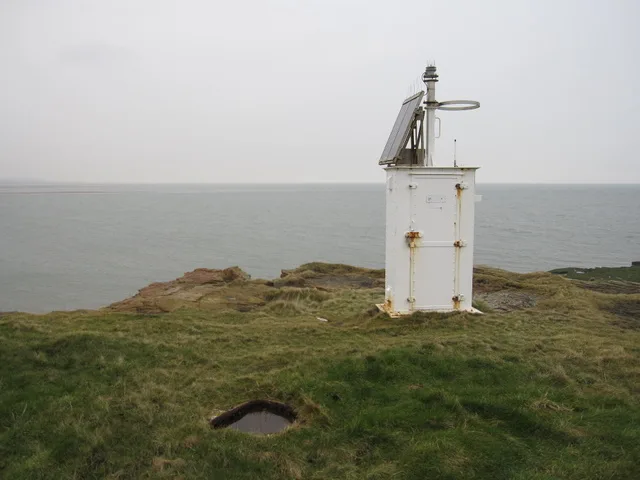
A lighthouse once stood on Hilbre to help shipping avoid the estuary's shifting sandbanks; its remains and outbuildings are still visible on the island today, long since decommissioned as navigation technology moved on. Long before that, local tradition connects Hilbre with an early religious cell or hermitage, in keeping with a number of small tidal islands around the British coast that attracted early Christian hermits precisely because they were cut off from the world twice a day.
Today Hilbre, Middle Eye and Little Eye together form a Local Nature Reserve managed by Wirral Council — known for grey seals hauled out on the sandbanks, wintering wading birds, and a geology of wind-carved sandstone that visitors can walk across at low tide, much as West Kirby residents always have.
Frequently asked questions
Can you walk to Hilbre Island?
Yes, at low tide, across the sands and gullies from West Kirby beach — but the tide returns quickly and cuts the islands off, so a walk to Hilbre should only be attempted with proper knowledge of the tide times.
Was there a lifeboat station on Hilbre Island?
Yes, from 1848/49 until its closure in July 1939. It saved 21 lives in 44 launches, crewed by the Hoylake lifeboat crew who walked over at low tide.
Our Research Group holds decades of local material — including records of who lived and worked in individual houses and shops across the village. Genuine enquiries are welcome.