For most of its history West Kirby was a small farming settlement clustered around the church. In little more than twenty years at the end of the 19th century, a railway line turned it into something else entirely.
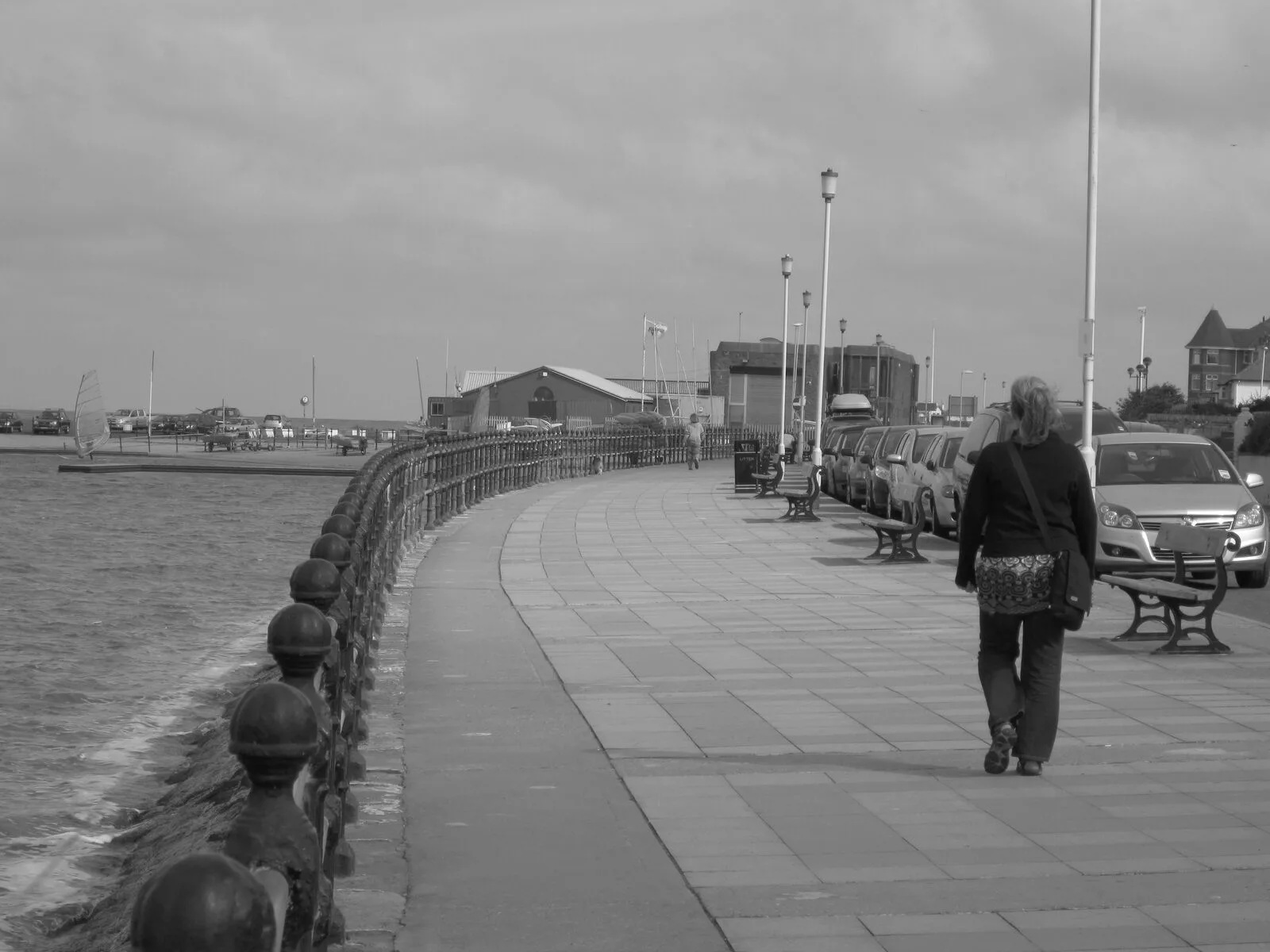
The promenade along the Marine Lake, laid out as part of the same Victorian development — photo: Rept0n1x, CC BY-SA 3.0, via Wikimedia Commons
Farming remained West Kirby's main employer until well into the 19th century. What changed it was a single piece of infrastructure: a railway.
The railway arrives, 1878
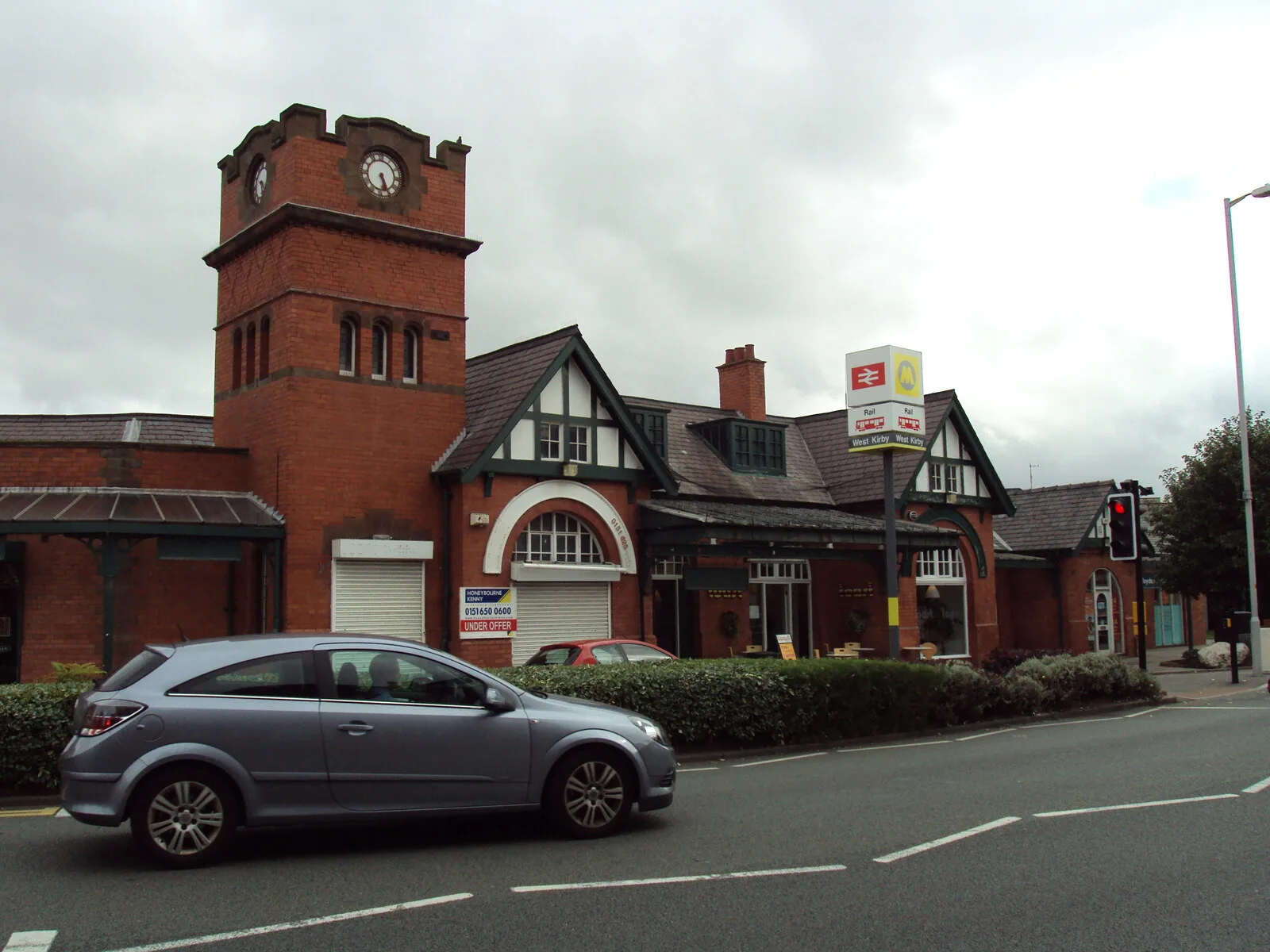
A line from Birkenhead had already reached Hoylake in 1866, run by the Hoylake Railway. On 1 April 1878, it was extended to a new terminus at West Kirby, run by the Hoylake & Birkenhead Rail & Tramway Company. For the first time, West Kirby was within easy commuting distance of Birkenhead and Liverpool.
The effect was immediate and lasting. A new town centre grew up around the station on Grange Road, Dee Lane and Banks Road — away from the old village by the church — attracting people of independent means, merchants, manufacturers, professionals, and those working across the water in Liverpool and Birkenhead, alongside the tradespeople who served this growing population.
Sea bathing and lodgings had already begun to draw Victorian visitors before the railway; afterwards, the pace of building accelerated sharply. The vast Hydropathic Hotel opened in 1884 on land next to what became Coronation Gardens — a “hydro” of the kind fashionable across Victorian Britain, offering health cures alongside seaside leisure.
Improved transport also underpinned the next phase of civic development: work began on the Promenade in 1897, ahead of the Marine Lake and Ashton Park at the turn of the century (see the Marine Lake & seafront).
A population explosion
The population figures tell the same story in numbers. The West Kirby township had just 148 residents in 1801, rising only slowly to 435 by 1851 — still a small farming village. By 1891, thirteen years after the railway arrived, that figure had risen to 2,441: a seventeen-fold increase within ninety years, the great majority of it packed into the last two decades of the century.
Local government struggled to keep pace. A local government district was created in 1891; it was reconstituted as an urban district in 1894, uniting the civil parishes of Hoylake and West Kirby, and in 1897 central government formally confirmed the area's name as “Hoylake and West Kirby.” That urban district administered the area until 1974, when it was abolished under the Local Government Act 1972 and West Kirby became part of the new Metropolitan Borough of Wirral, within Merseyside.
Our Research Group holds decades of local material — including records of who lived and worked in individual houses and shops across the village. Genuine enquiries are welcome.